Don’t you find that a new year brings a fresh start? There is something about that calendar turning over in January that makes you start dreaming. Did you know if you write down your dream (however big it may be) and put a date with it, it becomes a goal. A goal broken down into steps becomes a plan. And a plan backed by action becomes a reality.
Since it’s a new year, we think it’s the perfect time to set some resolutions and attainable goals. Did you know that setting goals, big or small, during any time of the year actually benefits your mental health?!
Goals are pathways to productivity and reminders to keep you motivated. They don’t always have to be big lofty goals; they can be daily goals (like a to-do list to get done) or weekly, or monthly goals (like setting deadlines for a school assignment or work projects).
Having specific goals will help keep you organized, and lowers stress and anxiety. Once you have achieved the goals you have set for yourself, feelings of happiness and satisfaction can help to improve your mental health.
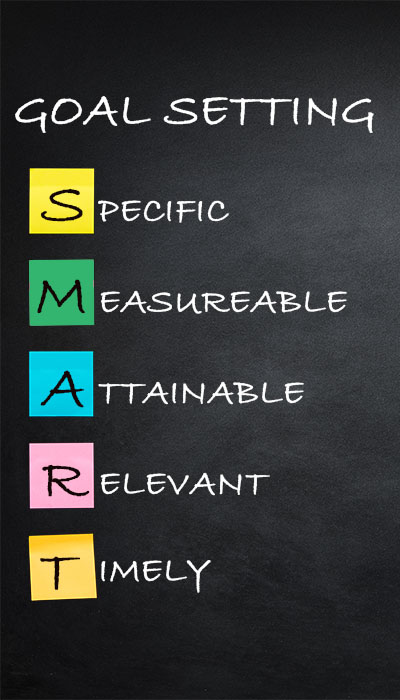
But for goals to truly benefit your mental well-being, they must be realistic and knowing how to make them realistic is half the battle. One way to create realistic goals is to follow the SMART system:
It’s important to remember that big, lofty goals should be broken down into smaller achievable goals to focus on incrementally. Not breaking big goals into ‘bite-sized chunks’ can make them feel unmanageable. Breaking a big goal into smaller, achievable goals, provides opportunities to celebrate milestones (even small ones!) along the way. This helps prevent feelings of stress, anxiety or frustration. Setting unrealistic goals will damage your motivation and confidence, which can be negative for your overall mental health.
You don’t need January and the new year to be your reason to start setting goals for yourself; start with daily tasks and as you build confidence in your ability to create SMART goals, set bigger and self-fulfilling goals. Setting goals will help keep you focused on what is best for you and how to keep on track to living your best life!
Need help setting your goals and creating a plan to achieve them? We can help! Visit the West Toronto Youth Hub and our team can recommend some great programs, like our Youth Mentorship and CHOICES programs, that will help you set your short and long-term goals, and help you to create a plan of action to achieve them. Remember: goals are always easier to achieve when you have a team to help keep you motivated and celebrate your successes!