Through ongoing learning, meaningful relationships, and Indigenous-led guidance, Yorktown Family Services is building a stronger culture of respect, accountability, and culturally responsive service.
By Aleka Allen
Every person who walks through our doors deserves to feel respected, understood, and supported. Across Canada, however, the historical and ongoing impacts of colonialism, systemic discrimination, and intergenerational trauma have created barriers that can affect how many Indigenous individuals and families experience and access health and social services, including their ability to build trust with organizations and service providers.
Recognizing this reality, Yorktown Family Services has been taking intentional steps to deepen its understanding of Indigenous histories, perspectives, and experiences and strengthen its approach to Truth and Reconciliation. In September 2024, that commitment included in-person Indigenous Cultural Competency training for all staff. Since then, the learning has continued through relationship-building, Indigenous-led guidance, committee initiatives, and ongoing opportunities for staff education and reflection.
The goal has not simply been to increase knowledge, but to foster a culture of learning, humility, and accountability that strengthens our relationships and enhances the quality of care we provide. The training encouraged staff to reflect on their assumptions, deepen their understanding of reconciliation, and consider how greater cultural awareness can inform service delivery. It provided an important foundation for continued learning about how Yorktown can build trust and create respectful and welcoming spaces for Indigenous youth, young adults, and families.
This work is helping to shape an organizational culture grounded in respect, humility, and continuous learning. It is influencing how we think about our engagement with clients, our collaboration with community partners, and our mission of supporting and equipping women, children, youth, and families to create positive change in their lives.
Learning Through Relationships
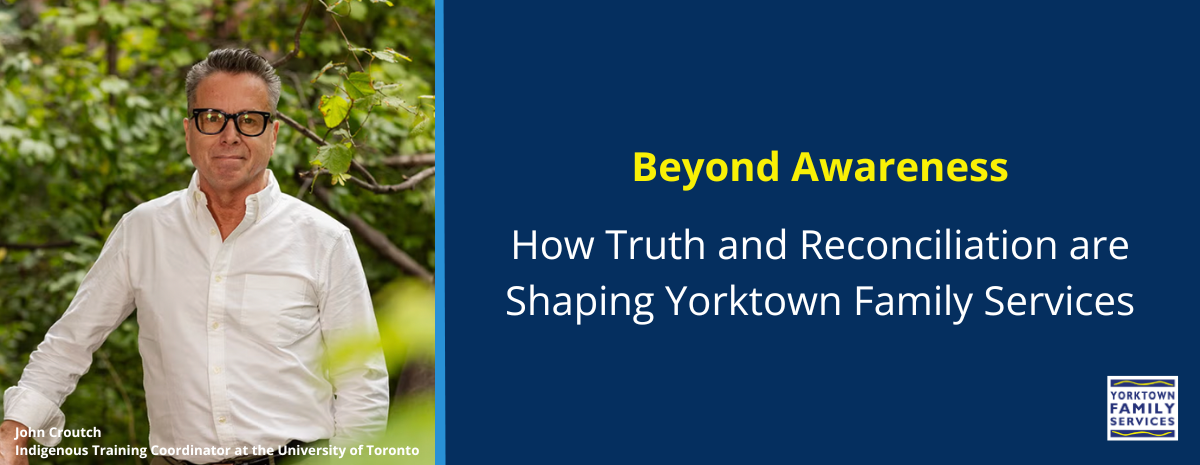
One of the most meaningful outcomes of the Indigenous Cultural Competency training has been the relationship that has grown from it. The September 2024 sessions were facilitated by John Croutch, Indigenous Training Coordinator at the University of Toronto. Although the formal training has concluded, Yorktown’s learning has continued through an ongoing relationship with John, whose guidance and support have provided opportunities for staff and the Truth and Reconciliation Committee to ask questions, deepen their understanding of Indigenous perspectives and experiences, and continue their journey of learning and reflection.
This ongoing connection has reinforced an important lesson: reconciliation is not achieved through a single training session. Rather, it is a continuous commitment to listening, learning, and building just, respectful relationships.
Yorktown’s Truth and Reconciliation Committee continues to support this learning and reflection by sharing educational resources, promoting Indigenous cultural and community events, and connecting staff with opportunities to further their understanding of Indigenous histories, cultures, and perspectives.
In August 2025, members of the committee attended the First Nations Wellness Conference as observers, where discussions highlighted the ongoing impacts of colonialism on the health and well-being of Indigenous individuals and communities and the importance of community-led, culturally grounded approaches to healing. The experience reinforced many of the themes explored through Yorktown’s Indigenous Cultural Competency training and ongoing reconciliation efforts, including the importance of understanding historical and contemporary realities when considering how services can be respectful, responsive, and equitable.
Building on this commitment to ongoing education, in October 2025 the committee launched a guest speaker series focused on Indigenous approaches to mental health and wellness, bringing Indigenous voices, knowledge, and lived experiences into conversations across the organization and inviting staff to explore different approaches to healing, well-being, and community care.
John Croutch opened the series with a keynote examining the history of social work and its complex relationship with Indigenous Peoples in Canada. By exploring the profession’s involvement in colonial policies and systems, as well as their enduring impacts, staff were encouraged to reflect on how these historical and ongoing realities continue to influence Indigenous individuals, families, and communities today. The presentation challenged staff to consider the broader context in which social services are delivered and how greater understanding can contribute to more culturally responsive, respectful, and equitable support.
Together, the Indigenous Cultural Competency training, participation in the First Nations Wellness Conference, ongoing relationship with John, and initiatives such as the guest speaker series are helping to deepen understanding and foster a culture of continuous learning at Yorktown.
At Yorktown Family Services, that learning is helping to shape a culture of greater awareness, accountability, and respect. It is challenging us to ask better questions, build stronger relationships, and approach our work from a place of humility. Most importantly, it is encouraging Yorktown to continue exploring what it means to be a more responsive organization—one that strives to meet people where they are and provide care that honours their experiences, identities, and strengths.
Continuing the Journey
Community service agencies have an important role to play in advancing Truth and Reconciliation. While there is no single path forward, meaningful progress is built through ongoing learning, honest reflection, relationship-building, and accountability. Initiatives such as establishing a Truth and Reconciliation Committee, engaging with Indigenous Knowledge Keepers, Elders, and community members, and recognizing the National Day for Truth and Reconciliation create opportunities to deepen understanding, strengthen relationships, and turn learning into meaningful action.
The journey of reconciliation belongs to all of us. As people who live, work, and serve communities on Indigenous lands, we share a responsibility to learn from the past, strengthen relationships in the present, and help build a more equitable future for Indigenous individuals, families, and communities.
We encourage our community to continue learning about the histories, experiences, and contributions of Indigenous Peoples and to consider how each of us can contribute to building more respectful and equitable relationships.
This is the work of reconciliation in practice. Not a destination, but a commitment. Not a single initiative, but a way of showing up for one another, meaningfully, every day.