This post was written with contribution from Ena Burbano, Yorktown Child, Youth and Family Therapist
Children exposed to domestic violence are at increased risk for depression, anxiety, social withdrawal, impaired affect regulation, aggression, insecure attachment and trauma effects (Alaggia and Donohue, 2017). High rates continue to be reported, investigated and validated (Fallon et al., 2015; Sinha, 2010).
Over the last few weeks, we’ve discussed some important aspects of being a father. We’ve talked about how to enhance relationships with your loved ones, gender roles and stereotypes and what being a mindful father actually means.
As we continue to introduce you to the topics we discuss in our Mindful Fathering® program, a natural next step is to help fathers learn more about the views and attitudes that lead to abuse.
What Is Abuse?
Abuse is…
- Mistreating someone, even those we love
- Harming, injuring and offending
- Misusing power and intending to hurt those we love
- Violating their trust, using force and violence
- Misuse of substances,
- Unlawful acts including when using substances
Legally, the definition of Partner or Spousal Abuse refers to the violence or mistreatment that a woman or a man may experience at the hands of a marital, common-law or same-sex partner. Any abusive, violent, coercive, forceful, or threatening act or word inflicted by one member of a family or household on another can constitute domestic violence.
Child Abuse refers to intentional or neglectful abuse, which includes sexual mistreatment, inflicted on a child:
- A parent or caregivers intentional or neglectful act or failure to act that results in a child’s abuse, exploitation or death
- An act or failure to act that results in a possibility of immediate and serious harm to a child
When violence takes place in the home, children of all ages, including babies, are exposed to it.
Hearing it, seeing it, knowing it happened, worrying about it, trying to ignore it or stop it, are all part of being exposed to violence.
Children exposed to family violence, experience:
- depression
- anxiety
- social withdrawal
- problems regulating emotions
- aggression
- insecure attachment
- trauma
- insecure attachment
- problems in school and academic achievement.
These effects can “cast a long shadow into the future,” affecting the child now and increasing vulnerability to problems as the child grows up.
Power and Control
The Power and Control Wheel – a tool we use within the Mindful Fathering program – allows fathers to see the visual impact their behaviours have on their loved ones and during the program we’ll use this wheel to open conversations that will allow for a dissection of its impacts.
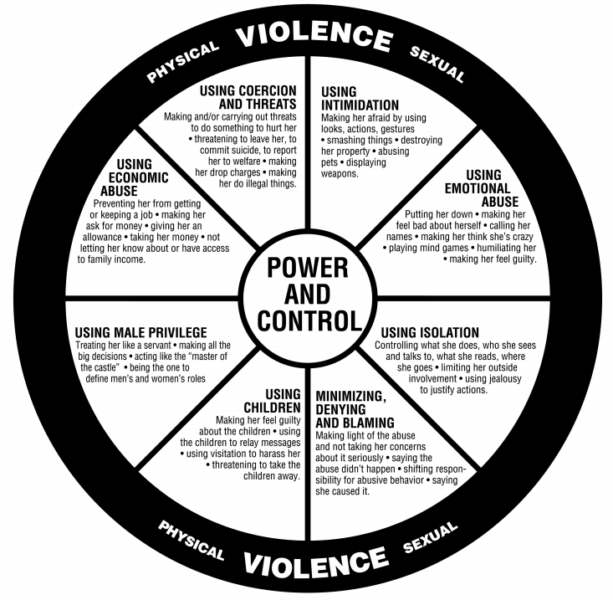
“When I was looking at the Power and Control Wheel at home I realized I have to work on helping my daughter see me as safe. She is still afraid of me.” – Father
The Cycle of Abuse
The cycle of abuse, also sometimes called the cycle of violence, helps illustrate common patterns of abusive behaviour in relationships.
- Tensions Building
- Tensions increase, there is a breakdown of communication, the victim becomes fearful and begins to placate the abuser.
- Incident
- Verbal, emotional or physical abuse happens with anger, blaming, arguing, threats and intimidation.
- Reconciliation
- The abuser apologizes, gives excuses, blames the victim, denies that the abuse occurred, or says that it wasn’t as bad as the victim claims.
- Calm
- The abuse incident is forgotten, no abuse is taking place and the abuser and victim are in the “honeymoon”phase.
How Mindful Fathering Can Help Break the Cycle of Abuse
During Mindful Fathering, fathers will be encouraged to self-reflect on their upbringing and how that impacts their parenting from a trauma informed lens without judgment.
When in the program, fathers will learn to use mindfulness strategies that will be practiced weekly so that they can practice the strategies at home when feeling stressed.
Fathers learn that there is a pathway that starts with triggers and gain mindful awareness of the process. Understanding the cycle of abuse and the process is fundamental to stopping the abuse.
Fathers will also learn alternative methods for conflict resolution, how to enhance their parenting skills and will leave the program being better able to have healthier relationships.
Yorktown’s Mindful Fathering program runs twice a year in the Fall and the Spring and supports fathers to become the fathers they want to be! If this program sounds like something you, or someone you love would be interested in participating in, please visit our website to learn more and to register for our next session.